




 9:00 am, December 31, 2025
I know I’ve said this in every December for the past five years, but this year really has been a defining year for the UK motor industry.
From the accelerating rise of Chinese brands to the reintroduction of EV incentives, from legacy manufacturers struggling for relevance to fresh challenges around finance and cybersecurity, the business we all work in has changed rapidly.
I completely expect the next 12 months to see a continued development of some of the trends we’ve seen in 2025, plus a few spanners thrown in for good measure. Who could have foreseen the JLR cyberattack? Exactly.

Continued rise of Chinese carmakers
In the Car Dealer Big Fat Christmas Quiz of 2025, there was some debate about whether 2025 was the year of the Chinese carmakers. I think we’ve yet to see the full effects of the Chinese entrants on the UK car market.
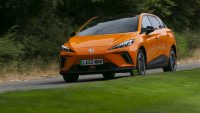
This year we saw BYD move from a new player to almost being an established and recognised brand in the UK, while Chery’s Omoda and Jaecoo divisions launched. We all knew of Omoda and Jaecoo’s plans for 2025, but even I was staggered at how quickly they’ve grabbed a share of the UK car market. It was so impressive that mother brand Chery decided to launch here too, and by the year’s end dealers are flocking to the all three brands. MG, meanwhile, continues to do what it has done for the past few years, and that’s quietly steal sales from the traditional brands.
I was very interested in Peter Vardy’s views on the Chinese car brands in one of our podcasts recorded in December. He highlighted how the dealers who have franchises with these brands are likely to have two or three ‘very good years’, but that doing business with the Chinese is very different from the traditional European car brands. It’s well worth a listen.

Ford’s struggles; Bullish Vauxhall
Few stories have been as symbolic in 2025 as the struggles of Ford. Once a dominant household name, Ford has found itself between cheaper Chinese rivals and more premium European alternatives. While Ford was buoyed by the eligibility of its excellent Puma Gen-E into the government’s Electric Car Grant, elsewhere the carmaker is in a pretty bleak situation.
Putting the Puma aside, Ford has effectively walked away from the affordable end of the market – an area that it dominated in recent decades. It killed off the Focus this year, leaving a group of expensive electric SUVs to be the backbone of its car range.
I really do think that brands like Ford – but especially the Blue Oval – is leaving an open goal for the Chinese to mop up the budget-conscious, value-driven customer – something Ford was a master at with the Fiesta, Focus and Mondeo.
A new partnership with Renault – who the hell saw that coming at the start of this year? – which will see Ford using Renault’s EV platform could see Ford return to the cheaper end of the market in 2028, but will it all be in vain? The market is shifting the whole time – can Ford afford to wait two years for some cheaper models?
And then there’s Vauxhall. The British brand looks in better health compared to its old rival, with a modern, fresh line-up that covers both petrol, hybrid and EVs.
Vauxhall got a new boss in Steve Catlin this year, and he told me that he wanted the brand to be back in the top-three in the UK new car market within the next few years. Bearing in mind that between January to September this year, the UK’s three best-selling car brands were Volkswagen, BMW and Kia, with the latter achieving sales of 93,309, Vauxhall had 66,415 – that’s even behind arch-rival Ford, which sold 91,506 cars. Is it a little too hopeful?

Catlin left the business in December after just six months in the hot seat. Is that dream of Vauxhall being a top-three brand dead also?
Electric Car Grant and EV pay-by-mile announced
One of the year’s most significant policy shifts was the reintroduction of an Electric Car Grant, alongside the announcement of a future EV pay-by-mile road pricing scheme. The grant helped stimulate demand at the lower end of the EV market, particularly for affordable models and leasing deals, while pay-by-mile signalled the government’s long-term plan to replace fuel duty.
Together, they sent mixed messages: encouragement in the short term, uncertainty in the long term. Within weeks of the pay-by-mile announcement, the European Union watered down its new petrol-diesel-car ban, heaping pressure on the UK government to follow suit. Will 2026 see another Labour policy shift? Who knows?
Motor finance scandal
The motor finance scandal continued to cast a long shadow over the industry in 2025. Investigations into discretionary commission arrangements and historic finance practices created uncertainty for dealers, lenders and customers alike. While many businesses insisted they had acted within the rules of the time, the reputational damage has been significant. As I write this, the Financial Conduct Authority believes it has worked up a plan for redress, but has already admitted it could adjust the plan after it received some heavy pushback. This certainly isn’t over and will rumble on into – and for the majority – of 2026.
JLR cyberattack
Who could have seen this happening? JLR was well on the way to turning itself around, with increased profits announced and plans ramped up for Jaguar, and then it was hit by a devastating cyberattack. At year-end the attack was long over, but the effects and the five-week production shut-down will continue to be felt for many months to come. If anything, it has highlighted that businesses, not just automotive ones, need to invest in digital resilience, contingency planning and staff training, as cyber threats become as damaging as physical disruptions.
Used EVs became more popular
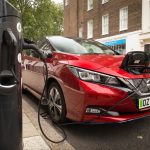
And lastly something that was always going to happen. With more and more excellent EVs becoming used cars, demand was going to shift at some point. Falling prices and wider choice have made used electric cars more accessible than ever. Used EVs have moved from niche to mainstream, and I expect more dealers will look to be stocking them in 2026.